


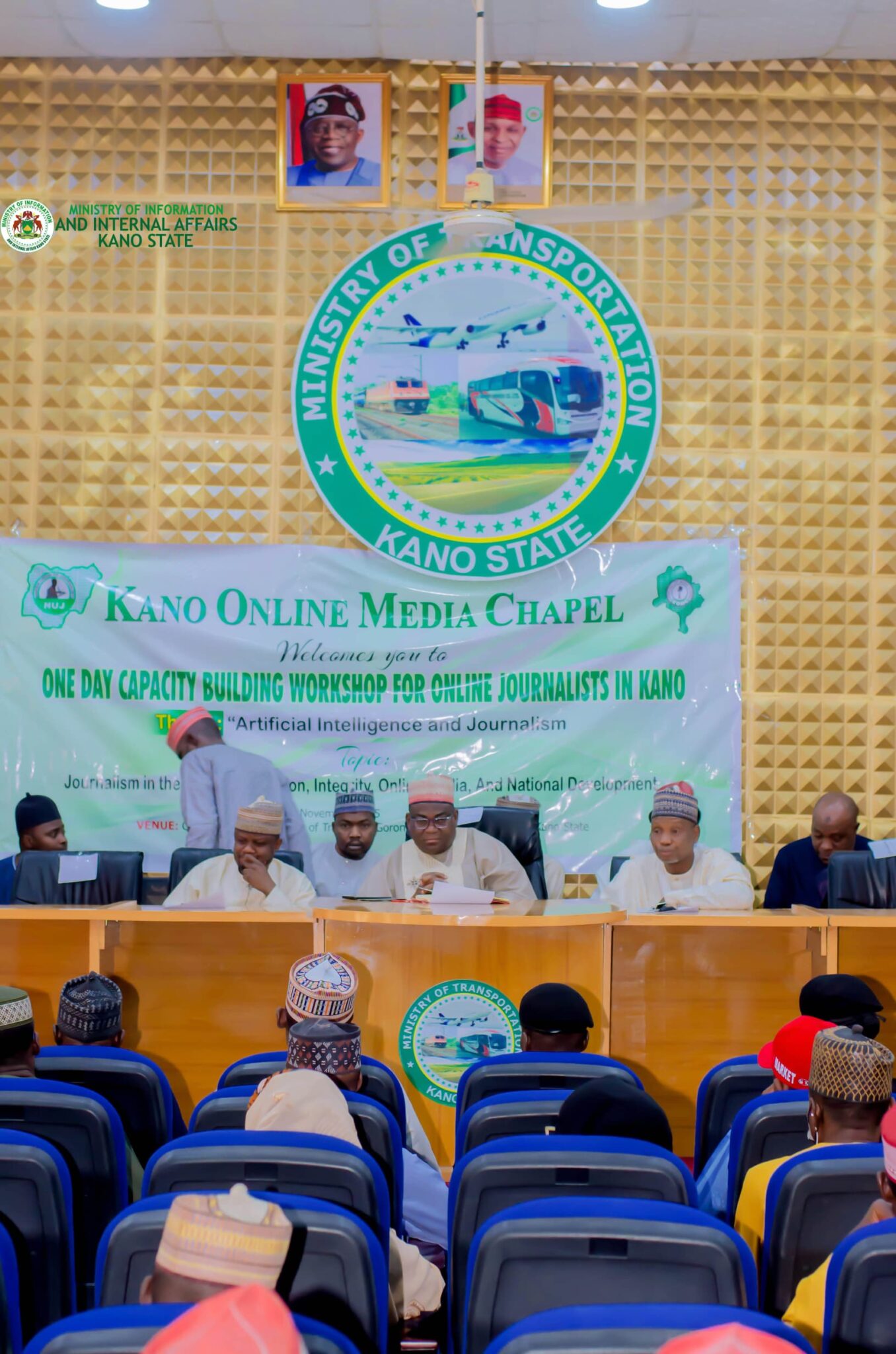
The Kano State Government has described online media as the fastest and most immediate means of disseminating information in today’s digital age, pledging sustained collaboration with its practitioners for the growth of the sector.
This commitment was made by the Director General, Media and Communication to Governor Abba Kabir Yusuf, Alhaji Sanusi Bature Dawakin Tofa, during a one-day capacity-building workshop for online journalists organized by the Kano Online Media Chapel.
Addressing participants, Alhaji Sanusi Bature extended a hand of partnership to the chapel, noting that there was no doubt about the competence of its leadership. He commended the chapel for organizing the maiden training, describing online journalism as not just an alternative, but a critical platform for mass communication.
The Director General further announced a donation of ₦2 million for the renovation of the chapel’s office. He emphasized the relevance of online media in modern governance, especially with the growing influence of artificial intelligence (AI) in news production and dissemination.
“Online media has come to stay, and in this era of AI, we will continue to support the association. We will ensure its sustainability. I want to assure you of the government’s support,” he stated.
Also speaking, the Kano State Commissioner for Information, Comrade Abdullahi Waiya, reaffirmed the government’s readiness to partner with the chapel. He said the Ministry of Information would continue to back initiatives that promote professionalism and strengthen online journalism as a credible information source.
In his remarks, the Chairman of the Nigerian Institute of Public Relations (NIPR), Kano Chapter, Aliyu Yusuf, described the theme of the workshop as timely, given the fast-changing landscape of journalism. He said discussions around AI and digital reporting were crucial for advancing media practice.
Earlier, the Chairman of the Kano Online Media Chapel, Comrade Abubakar Abdulkadir Dangambo, appreciated the presence of government officials and stakeholders. He explained that since its inauguration, the chapel had embarked on a registration drive to sanitize online media practice and had opened an account to enhance operational efficiency.
Dangambo highlighted some of the challenges confronting the chapel, including limited office space and the absence of mobility. He appealed for support from stakeholders, stressing the need for an 18-seater bus to ease the work of online journalists across the state.
Despite the challenges, the chairman reaffirmed the chapel’s commitment to professionalism, saying:
“We will continue to disseminate accurate and factual information. Our focus remains on integrity, objectivity, and service to the public.”
The workshop brought together practitioners, government representatives, and communication experts to explore emerging trends in digital journalism and the role of technology in shaping modern newsrooms.