


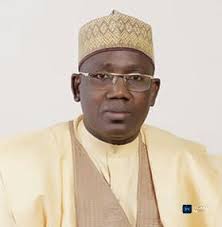
By:- Hon. Umar Bello Jada
Below is a detailed, intellectually grounded analysis of Rabiu Musa Kwankwaso’s unusual capacity to endure serial betrayal from protégés he personally lifted from ground zero into positions of power and influence, and how this endurance has shaped his political identity, movement, and relevance.
Rabiu Kwankwaso and the Burden of Political Betrayal
Endurance, Strategy, and the Psychology of Power-Building
Rabiu Musa Kwankwaso’s political career stands as one of the most paradoxical in Nigerian politics: a leader repeatedly betrayed by his own protégés, yet consistently resilient, relevant, and influential. Unlike many political godfathers who collapse after the first major defection of their protégés, Kwankwaso has endured serial betrayals without emotional implosion or political extinction. This capacity is neither accidental nor purely emotional, it is structural, ideological, and strategic.
1. Builder of People, Not Just Structures
Kwankwaso’s political style is rooted in human capital development, not merely electoral arithmetic. He has a long record of identifying individuals with little or no political standing, nurturing them through mentorship, exposure, education, and access, and positioning them into prominence—commissioners, legislators, governors, ministers.
This approach, while noble, carries a built-in risk.
Those who rise rapidly often forget the ladder.
Kwankwaso understands this risk yet continues to build people. His endurance of betrayal stems from a belief that empowerment is morally superior to possession, even when it comes at personal cost.
2. Ideology as Emotional Armor
Unlike transactional politicians, Kwankwaso anchors his politics in an ideological movement. Kwankwasiyya, rather than personal loyalty alone. This ideological foundation acts as emotional armor. When protégés defect, he does not experience it solely as personal treachery but as ideological deviation.
This distinction matters. Leaders without ideology internalize betrayal as humiliation; leaders with ideology interpret it as political divergence. Kwankwaso belongs to the latter category.
3. Long-Term Political Memory and Patience
Kwankwaso’s endurance is deeply tied to his long political memory. He has witnessed cycles of power: rise, fall, betrayal, return. This historical awareness breeds patience. He understands that Nigerian politics is fluid, not linear.
Many of those who betrayed him did so believing they had outgrown him, only to later discover that power without roots is fragile. Kwankwaso does not always seek revenge; instead, he allows time and political gravity to do its work.
4. Emotional Discipline and Self-Containment
A defining feature of Kwankwaso’s endurance is his emotional restraint. He rarely reacts impulsively to betrayal. There are no public outbursts, reckless counterattacks, or desperate maneuvers. This discipline is rare in a political environment driven by ego and instant retaliation.
By refusing to dramatize betrayal, he denies defectors the moral victory of having “escaped oppression.” Silence, in his case, is not weakness, it is strategic restraint.
5. Movement Over Individuals
Kwankwaso’s capacity to endure betrayal is strengthened by his commitment to movement politics rather than personality politics. Kwankwasiyya survives individuals because it is embedded in symbols, narratives, social welfare initiatives, youth mobilization, and collective identity.
When individuals leave, the movement remains. This reverses the usual godfather dynamic:
The individual needs the movement more than the movement needs the individual.
This structural advantage cushions the shock of betrayal.
6. Understanding the Nature of Power Hunger
Kwankwaso appears to possess a rare clarity about human ambition. He understands that power often corrupts memory and gratitude. Rather than being surprised by betrayal, he anticipates it as a possible outcome of empowerment.
This psychological realism allows him to absorb betrayal without bitterness. He empowers people knowing some will leave and proceeds anyway.
7. Strategic Relevance Despite Betrayal
Despite repeated defections of protégés to rival parties and power centers, Kwankwaso remains nationally relevant. This is because he retains grassroots legitimacy, especially among the masses who see him as consistent, accessible, and principled.
Betrayal at the elite level has not translated into mass abandonment. On the contrary, it often reinforces his image as a leader betrayed for refusing to compromise his values.
8. Moral High Ground as Political Capital
Enduring betrayal without vindictiveness has earned Kwankwaso a subtle but powerful asset: moral authority. In Nigerian politics, where opportunism is common, consistency stands out. Each betrayal paradoxically strengthens his narrative as a victim of elite opportunism and a champion of the common people.
Conclusion: Endurance as a Form of Power
Rabiu Musa Kwankwaso’s capacity to endure serial betrayal is not weakness; it is a distinct form of political strength. It is built on ideology, patience, emotional discipline, and a long-term vision of history. By choosing to continue empowering people despite repeated disappointments, he affirms a rare political philosophy.
Leadership is not validated by loyalty alone, but by the courage to keep building even when builders are betrayed.
In a political culture obsessed with control, Kwankwaso’s endurance stands as a lesson, true influence outlives betrayal, KWANKWASIYYA WILL FOR EVER REMAINS LEGENDARY POWER BASE.